
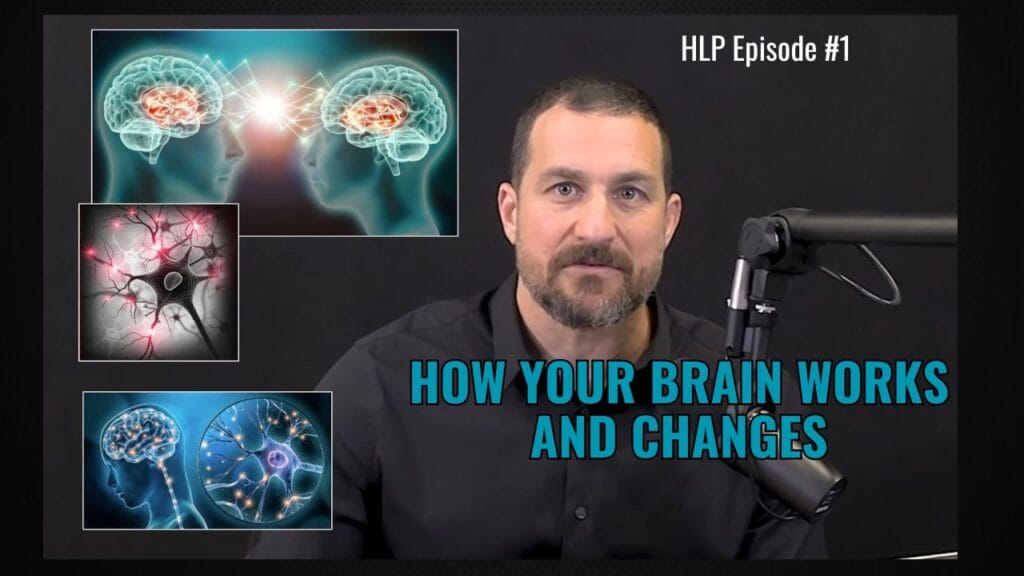
🎙️ HLP #1 | 📅 Release Date: January 5, 2021
Image Credit: Screenshot of Huberman Lab Podcast #1
In this episode of the Huberman Lab Podcast, neuroscientist Andrew Huberman explains how the brain and nervous system create our thoughts, emotions, and behaviors—and how they can be deliberately changed through neuroplasticity. He breaks down the fundamentals of how neurons communicate, the role of attention in learning, and the difference between automatic (bottom-up) and intentional (top-down) control of the mind and body.
A key theme of the episode is that lasting change happens in two stages: focused effort followed by deep rest, particularly sleep, which allows the brain to rewire itself. Huberman also discusses the autonomic nervous system, ultradian rhythms, and practical ways to improve learning, performance, and emotional regulation by aligning with how the brain naturally works.
What is Nervous System?
Andrew Huberman explains that the nervous system is a continuous communication network connecting the brain, spinal cord, and body, shaping everything we think, feel, and do. Understanding how this system works is the foundation for changing behavior and improving performance through neuroplasticity.
Deja Vu
Huberman describes déjà vu as a result of similar neural firing patterns across different experiences, creating a strong sense of familiarity even in new situations. He emphasizes that it’s a normal brain phenomenon related to memory processing rather than anything mysterious
How War, Guns Shaped Our Understanding Of The Brain
Huberman explains that much of our knowledge about brain function came from studying soldiers who survived localized brain injuries, which revealed how specific brain regions control behavior and perception. These cases helped scientists map the nervous system and better understand how different brain areas contribute to human function
Attention and Multi-tasking
Huberman explains that humans can split attention between multiple stimuli using separate “spotlights” of focus, meaning multitasking is possible but limited. He emphasizes that attention is largely under conscious control, especially when the brain is well rested.
Bottom-Up (Reflexive) vs. Top-Down Control of Behavior (Delibrate)
He describes how behavior is shaped by two systems: automatic reflexive responses driven by sensory input (bottom-up) and deliberate, effortful control from higher brain regions (top-down). Improving self-control involves strengthening top-down processes so intentional actions override impulses.
Brain is a Map of Experience – 1) Sensations
Huberman explains that sensations are raw inputs from sensory receptors that occur continuously, whether or not we are aware of them. These signals form the foundation of how the nervous system constructs our experience of the world.
Brain is a Map of Experience – 2) Perceptions
He distinguishes perception from sensation, noting that perception depends on attention and interpretation by the brain. What we perceive is therefore not objective reality but a filtered representation shaped by focus and context.
Brain is a Map of Experience 3) Emotions (Feelings)
Huberman explains that emotions arise from patterns of neural activity and chemical signals in the body, while feelings are the conscious experience of those states. He highlights how context and physiology interact to shape emotional experiences.
Brain is a Map of Experience – 4) Thoughts
Thoughts are described as combinations of present sensory input, past memories, and predictions about the future. They can occur automatically or be directed intentionally through focused attention.
Brain is a Map of Experience – 5) Actions
Actions represent the final output of the nervous system, integrating sensations, perceptions, emotions, and thoughts into behavior. Over time, repeated actions can become automatic through neural rewiring.
Importance of Neuroplasticity
Huberman introduces neuroplasticity as the brain’s ability to change connections and function throughout life. This capacity allows learning, habit formation, and recovery from challenges when the right conditions are present.
Portal to Neuroplasticity
He explains that neuroplasticity is triggered by states of focused attention combined with effort and sometimes frustration, signaling the brain that change is needed. Without this engagement, the brain tends to remain stable and energy-efficient.
How to Get Most of Our Neuroplasticisy
Huberman discusses practical ways to enhance learning, including intense focus sessions followed by rest and sleep, which consolidate neural changes. Consistency and repetition are key factors in making new skills or behaviors stick.
Accelerating Learning in Sleep
He explains that learning does not fully occur during practice but is strengthened during sleep, when neural circuits are reorganized and reinforced. Deep sleep and non-sleep deep rest play major roles in memory and skill consolidation.
Leveraging Ultradian Cycles
Huberman describes 90-minute ultradian rhythms that govern energy and focus throughout the day, suggesting people work in intense blocks followed by deliberate rest. Aligning work with these biological cycles can significantly improve learning and productivity.
Bonus Shorts
In the Shorts below:
1. Huberman talks about a neuron “…that would become electrically active only when the person viewed the picture of Jennifer Aniston”
Enjoyed this content? Help power future podcast clips (and my caffeine levels). ☕
☕ Buy Me a CoffeeEvery coffee helps keep the content coming!
Disclaimer: This content is provided for informational and entertainment purposes only. Views expressed in the embedded video or original podcast belong to the respective creators and do not necessarily reflect the views of this website. No affiliation or endorsement is implied.