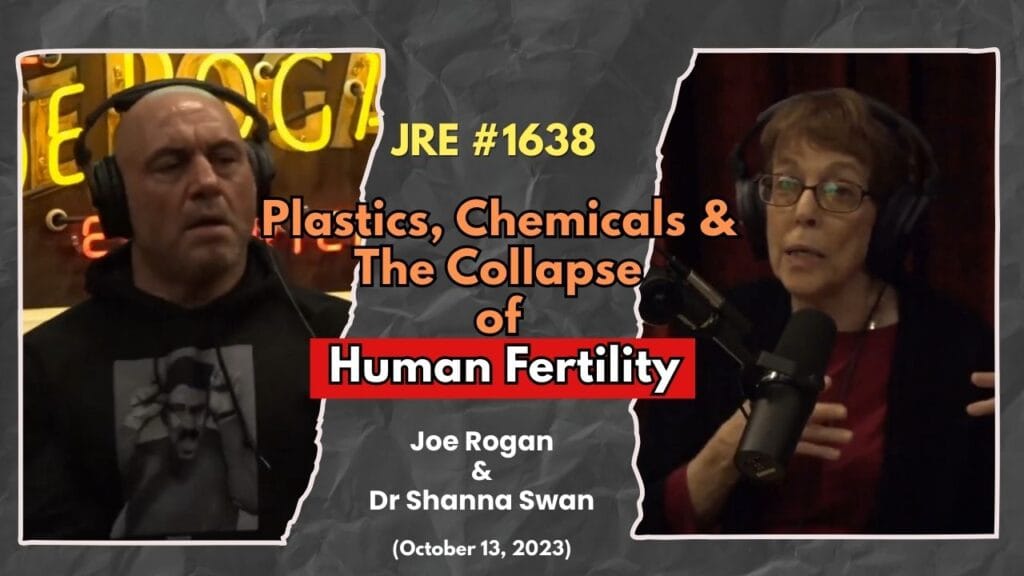
🎙️ JRE #1638 | 📅 Release Date: October 13, 2023
Image Credit: Screenshot of JRE#1638
In this episode of the JRE #1638, Dr. Shanna Swan joins Joe Rogan to discuss how modern environmental chemicals—particularly endocrine disruptors—may be affecting human fertility, development, and long-term health. The conversation explores research on declining reproductive metrics, the role of plastics and pollutants in everyday life, and what individuals and societies can do to reduce exposure. It’s a wide-ranging discussion that blends science, public health concerns, and practical lifestyle considerations.
The Modern Reproductive Crisis
Joe Rogan and guest Dr. Shanna Swan talks about the adverse effects of reproductive health declining at an alarming rate due to environmental factors. This effects the sperm count, miscarriage rate, fertility rates, testosterone rates etc. The compounds effecting is called “Phthalates“, which are the plastics around us. This trend includes a significant drop in sperm counts and fertility rates across the globe.
When Did People Come To Know About Phthalates?
Dr Swan talks about how chemicals in plastics—particularly phthalates—can disrupt hormones that guide male reproductive development before birth. Research first seen in animals and later in humans shows that these chemicals can interfere with testosterone, leading to shorter anogenital distance and less complete masculinization in male offspring.
The clip highlights the importance of recognizing these environmental risks and supporting actions that reduce exposure to harmful chemicals for better reproductive health.
Measuring Phthalates
Dr Swan outlines a major human study showing that prenatal exposure to phthalates—chemicals found in many plastics—can affect male infant development by disrupting testosterone activity. Researchers measured phthalate levels in pregnant women’s urine and linked higher exposure to changes in male genital development, confirming similar effects previously seen in animals.
By repeating the study with improved methods and consistent results, the work strongly supports that phthalates interfere with normal fetal hormone processes and highlights the importance of careful monitoring of environmental chemicals in human health research.
Phthalates Affecting Sperm Count And Taint Length
Dr Swan explains that the distance between the genitals and the anus—called the anogenital distance (AGD)—is linked to male fertility. A study in Rochester found that men with an AGD shorter than 2 inches were about seven times more likely to have low sperm counts than those with a longer AGD.
Another study in California confirmed that infertile men tend to have shorter AGD, suggesting this trait, likely set at birth, could be an early indicator of reproductive health.
When Did Plastic Get Into Our Food System
Dr Swan warns about the surge in plastics and chemicals like phthalates since the 1950s, driven by the petrochemical boom, which has contaminated our food supply and everyday items. These substances have been linked to sharp drops in men’s sperm counts and testosterone levels, as well as irreversible developmental problems in children due to hormonal imbalances.
Despite clear scientific evidence emerging in the early 2000s, there’s been little public discussion about this crisis, which is quietly threatening human fertility and overall development through our dependence on plastic products.
Problem Having Children
Dr Swan warns of a sharp global drop in fertility, mainly driven by chemicals from plastics and smoking that disrupt hormones, beyond just later parenting. It stresses that harm to unborn babies during fetal development—such as from microwaving plastics or using heated bottles—is often permanent and irreversible later in life.
Despite the potential for shortened lifespans and threats to future generations, societal stigma stifles open discussions about reproductive health, leaving the public largely unaware of this escalating crisis.
Drop In Sperm Count In West
Dr Swan details a dramatic over 50% drop in sperm counts in Western countries from 1973 to 2011, because studies have been conducted mostly in western countries while there are not many studies in developing or underdeveloped countries. This is attribute mainly on womb exposures to toxins like phthalates, pesticides, and flame retardants.
These chemicals disrupt early development, potentially causing multi-generational reproductive problems that could spark population crises. While mainstream media coverage lags, hope lies in cleaner environments reversing the trend over generations.
What Is Happening To Women And Female Babies?
Dr Swan examines how environmental chemicals disrupt hormone balances, potentially causing female infants to masculinize through elevated testosterone from pesticides like glyphosate during pregnancy. While evidence on these pro-androgens is still developing, the lack of strong regulations leaves consumers to dodge these widespread toxins in everyday products.
Dr Swan urges more investigation into how such pollutants are reshaping human biology at a fundamental level
Factors Affecting Development Cycle
Dr Swan reveals how chemicals in everyday coatings—like those on Teflon pans, rain jackets, and pizza boxes—act as hormone disruptors affecting reproductive health and fetal growth. These substances are biologically active, interfering with endocrine systems despite their practical uses in creating barriers against water, grease, or contaminants.
The discussion criticizes the “whack-a-mole” approach in manufacturing, where banning one toxic chemical like BPA leads to replacements, such as BPF or BPS, that may pose similar or greater risks, perpetuating health concerns without true resolution.
What Can Public Do About It?
Dr Swan points out how phthalates infiltrate the food supply not just via packaging but through plastic equipment like milking tubes during processing and personal care products due to trade secret loopholes. To cut exposure, it recommends switching to glass or ceramic kitchenware, never microwaving in plastic, choosing fresh produce from farmers’ markets, and checking personal care labels.
She calls for more research to trace contamination from farm to table and improve labeling for better consumer protection.
What Happens To Adult With Phthalates?
Dr Swan explains how phthalates from plastics and microwaved foods affect adults, an under-researched area compared to early-life impacts, with Harvard IVF studies showing higher urine/blood chemical levels link to fewer eggs retrieved, poorer implantation, and lower live birth rates.
The clip suggests potential ties to accelerated aging, brain decline, and athletic performance in young men, but notes barriers like study costs, industry resistance to regulation, and untested chemical replacements.
Chemicals Associated With Miscarriages
Dr Swan spotlights man-made chemicals like chlorination by-products in tap water and solvents in cleaning, which raise miscarriage risks through drinking or skin absorption, including from chlorinated pools. It critiques the 1976 Toxic Substances Control Act for grandfathering thousands of untested chemicals, leaving major regulatory gaps.
The push is for more research funding, public awareness via media, and label scrutiny to counter ongoing exposures.
Sperm Counts In Urban And Rural Areas
Dr Swan health risks in urban vs. rural areas, noting urban dwellers in places like LA face about 10 years shorter lifespans from pollutants like brake dust, while a Missouri-Minneapolis study surprisingly found rural men with half the motile sperm of urban men due to pesticide exposure via air or water.
Even non-farmers in agricultural regions show high pesticide residues tied to poor semen quality, but cases like the DBCP (a pesticide once widely used as a soil fumigant) ban prove quick recovery after removal.
The talk critiques monoculture farming’s chemical reliance versus regenerative methods that restore natural cycles, amid 200-year environmental shifts from plastics and post-WWII chemicals.
Fertility Rate Falling Worldwide
Dr Swan details a global fertility crash, with average children per couple falling from about 5 in 1960 to under 3 now, tied to over 50% sperm count drops in recent decades from chemical and plastic exposures. Places like Singapore (fertility rate ~0.97) and South Korea (~0.72) hit record lows despite pro-family incentives. Currently, there appear to be no known medical interventions to reverse the biological damage caused by these pollutants during fetal development.
The conversation ultimately underscores a growing concern regarding the future of human reproduction in an increasingly toxic world.
Humans Considered Endangered Species
Dr.Swan outlines the U.S. Fish and Wildlife Service’s definition of an endangered species, which requires meeting just one of five specific criteria. She argues that humans satisfy three of these categories due to habitat destruction, inadequate regulatory protections, and man-made existential threats like chemical-driven fertility declines.
This analysis underscores a critical paradox: despite our global population nearing 8 billion, these systemic vulnerabilities jeopardize long-term human existence.
Joe Rogan Acing The Jizz Quiz
In this clip, Dr. Shanna Swan, quizzes Joe Rogan on fertility basics, explaining male infertility hinges on sperm concentration, motility, and normal morphology. Lifestyle factors like diet/exercise, plus advancing paternal age, harm sperm DNA and raise miscarriage odds, while testosterone therapy suppresses natural production rather than aiding fertility. Men contribute to conception issues as much as women, underscoring shared responsibility.
Dr Shanna Swan shares her IG page for the Jizz Quiz and Joe gets all quiz correct. Check you knowledge too with the Jizz Quiz, and see how much you have learned so far.
Bonus Shorts
In the Shorts below:
1. Erectile Dysfunction Under 40 years
2. BPA, BPF and BPS Bottles
3. Do not Microwave in Plastic
4. Drawback of Phthalates in men and women
5. Identifying safe plastics
6. US and Europe regulation standard
If you found this conversation interesting, you might enjoy exploring the ideas further in Dr Swan’s book below.
(This is an affiliate link, which means I may earn a small commission at no extra cost to you.)

Count Down
by Shanna H. Swan & Stacey Colino
This book explores how environmental factors are affecting reproductive health and fertility worldwide. It expands on many of the topics discussed in the episode.
As an Affiliate Associate, I earn from qualifying purchases.
About the Author:

Shanna Swan is an environmental epidemiologist whose work examines the impact of chemical exposure on reproductive health and child development.
Enjoyed this content? Help power future podcast clips (and my caffeine levels). ☕
☕ Buy Me a CoffeeEvery coffee helps keep the content coming!
Disclaimer: This content is provided for informational and entertainment purposes only. Views expressed in the embedded video or original podcast belong to the respective creators and do not necessarily reflect the views of this website. No affiliation or endorsement is implied.