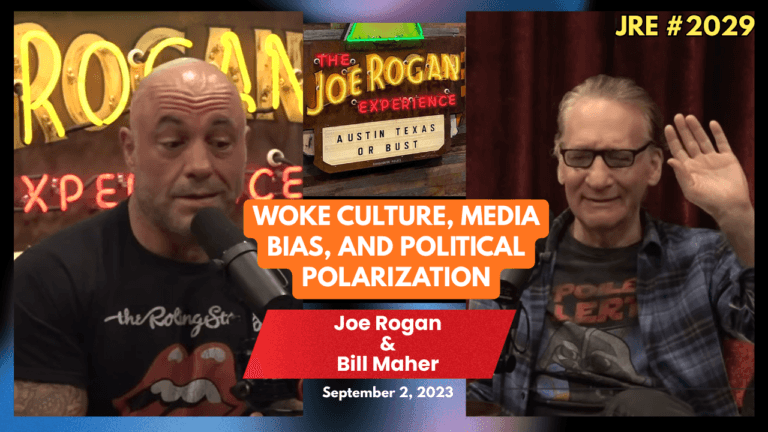
🎙️ JRE #2029 | 📅 Spotify Release Date: September 2, 2023
Image Credit: Screenshot of JRE #2029
In this episode of the JRE #2029, Joe Rogan and comedian/political commentator Bill Maher engage in a wide-ranging, candid conversation that primarily critiques modern progressive ideology, “woke” culture, and what they perceive as a decline in common sense. They discuss the excesses of identity politics, cancel culture, and the suppression of free speech, often contrasting today’s climate with a more traditional liberal perspective that valued debate and humor.
The tone is one of shared frustration with ideological purity tests, especially within institutions like universities and media.
How Liberal is Different from Wokeism
Joe and Bill describe themselves as “1990s liberals,” claiming their views haven’t changed but that modern liberalism has shifted toward more extreme or “woke” positions that demand strict ideological agreement. They also discuss how liberalism has shifted toward more extreme “woke” positions, which they see as different from traditional liberal values.
In particular, they contrast the older liberal ideal of a color‑blind society with the modern focus on race and identity in social and political discussions.
Idea Behind Wokeism
Joe and Bill argue that modern “woke” politics focuses heavily on race, which they believe differs from the traditional liberal idea of a color‑blind society where people are judged by merit. They suggest that while efforts to correct social inequality often aim to support minorities, the deeper issue in many communities is extreme poverty, crime, and lack of opportunity rather than race alone.
They also criticize policies like reducing police funding or tolerating theft, claiming such approaches worsen crime and end up benefiting wealthier people who can afford private security.
Hypocrisy Of Wokeism
Bill criticize policies such as defunding the police, arguing that reducing police presence led to higher crime and forced wealthy residents to hire private security, which led to worsening of inequality. Austin had to “course correct” that policy and refunded by expanding police funding.
They also argue that rising violence in cities like Chicago is not being addressed or reported seriously enough, particularly when it occurs within the same communities.
Why Joe Moved To Texas
In this segment, Joe Rogan and Bill Maher criticize what they see as unrealistic government spending expectations, arguing that some people want extensive welfare programs similar to those in Sweden while maintaining low taxes like those in Arizona. They then pivot to COVID, saying Rogan left his city mainly over lockdown policies, and both emphasize that experts they trust believe you cannot stop a respiratory virus with lockdowns and that obesity was a dominant COVID comorbidity that public discussion soft-pedaled for fear of offending people.
They criticize “body positivity” when it denies health risks, insisting you can consider any body type beautiful while still acknowledging, on scientific grounds, that obesity greatly increases the danger from diseases like COVID.
Obesity Labelled As Disease
Joe Rogan and Bill Maher discuss weight-loss drugs such as Ozempic, questioning how well scientists understand why they work and raising concerns about potential side effects like muscle loss and digestive problems. They argue that society has quickly shifted toward viewing obesity primarily as a disease rather than something largely controllable through diet and exercise.
They also discuss the role of processed foods, sugar, and industry practices in increasing obesity, while maintaining that individuals can still take responsibility for improving their health.
Depression and Mental Health
In this segment, Joe Rogan and Bill Maher discuss depression and argue that it can stem from many factors, including genetics, life circumstances, and lifestyle. They distinguish between “logical” depression caused by difficult situations—such as financial stress or uncertainty—and depression that persists even when someone is successful or outwardly thriving.
They suggest that purpose, meaningful work, relationships, health, and daily habits can play important roles in mental well-being, though they acknowledge that some cases may involve deeper biological causes.
Gender-Affirming Care
Joe Rogan and Bill Maher criticize what they call “gender-affirming care” for minors, arguing that children are too young to make irreversible medical decisions such as puberty blockers or surgery. They express concern about potential long-term medical effects and claim that questioning these practices is often discouraged in public debate.
They also argue that political polarization and cultural trends influence how the issue is discussed, and they criticize politicians such as Joe Biden for, in their view, avoiding confrontation with progressive factions of their party on the topic.
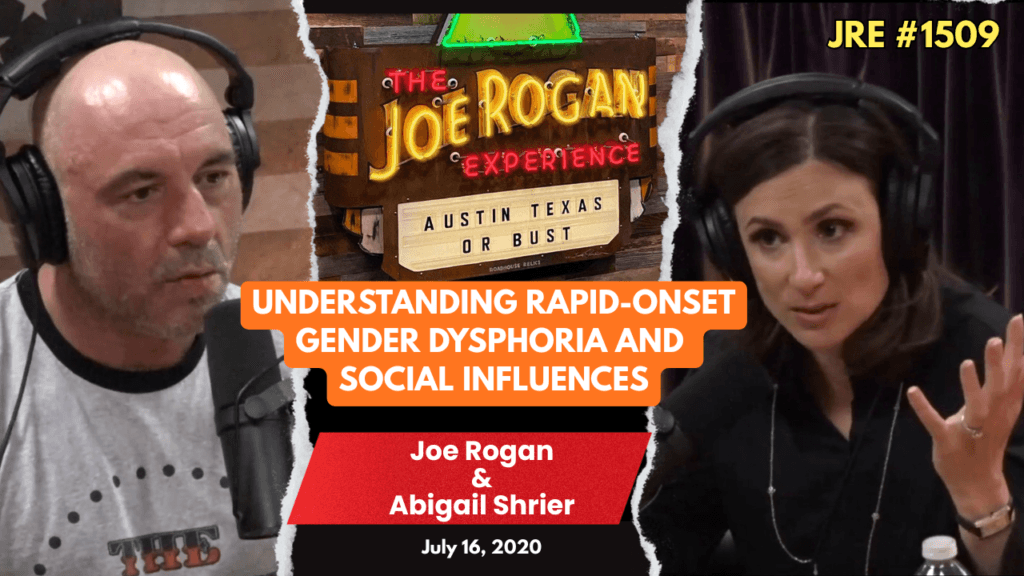
Joe Rogan had a much longer discussion on this issue in JRE #1509 with guest Abigail Shrier.
Biden and Trump
Maher criticizes Biden for passively accommodating “woke” extremes to avoid party infighting, while Rogan highlights Biden’s apparent mental decline, frequent confusion, and frailty at age 81 as major concerns, contrasting him with Trump’s more robust appearance despite his age.
They debate Trump intensely, with Maher labeling him a “crazy, stupid criminal” driven by malignant narcissism, Rogan pushes back on the severity but acknowledges Trump’s flaws, while both note the high risks of either running again given their advanced ages.
Moral decay of United States by Introducing Marxist and Leninism
Rogan introduces Yuri Bezmenov, a KGB defector who in a 1984 interview described the Soviet Union’s alleged four-stage plan for ideological subversion of the U.S.: demoralization (15-20 years of eroding morals and perceptions through education and media, making people unable to accept facts), destabilization, crisis, and normalization, claiming America’s demoralization was already complete and irreversible without a shock.
They connect this to modern issues like left-wing dominance in elite colleges teaching Karl Marx (despite his racism) and figures like Che Guevara as heroes, while erasing Western canon like Shakespeare in favor of “anti-racist” curricula.
They debate whether this subversion came directly from Russia or arose organically but agree it explains widespread ideological rigidity.
Free Speech, Echo Chamber And Censorship
Joe Rogan fondly recall a high school debate around age 14 where Barney Frank eloquently outshone a clunky conservative from a right-wing group, convincing the audience through open discourse rather than suppression.
Now it is replaced by echo chambers, social media censorship, and shunning of opposing views. This avoidance, he argue, reinforces believers’ sense of silencing (e.g., Trump’s arrests boosting his support) and hinders truth-testing via rigorous debate.
MSNBC Lies By Omission
Joe Rogan and Bill Maher argue that echo chambers on social media and cable news like MSNBC and Fox discourage challenging one’s ideology, with both networks relying on lies of omission to keep ratings high by feeding audiences confirming stories rather than major news.
MSNBC, once somewhat distinct from Fox’s overt bias, now mirrors it as hosts monitor real-time metrics and avoid questioning narratives to prevent audience drop-off or firing, as happened to the independent-minded Ed Schultz.
Covid19, Big Pharma and Media Bias
Joe Rogan and Bill Maher criticize mainstream media outlets such as MSNBC and commentators like Rachel Maddow, arguing that they present one-sided narratives and sometimes repeat misleading claims about pandemic policies. They question messaging around COVID-19 vaccines and the dismissal of alternative treatments such as Ivermectin, suggesting political and corporate interests influenced the debate.
They also reference criticism of pharmaceutical companies, mentioning controversies involving Purdue Pharma and the Sackler family, to argue that public skepticism toward the pharmaceutical industry should apply to pandemic policies as well.
The Real Anthony Fauci
They discuss RFK Jr.’s The Real Anthony Fauci, which accuses Fauci of mishandling the AIDS crisis by pushing AZT—a toxic chemotherapy drug that allegedly killed asymptomatic patients like Arthur Ashe faster than the disease—and prioritizing patented treatments over safer alternatives.
They also critique Fauci’s role in gain-of-function research funding to Wuhan, halted by Obama’s 2014 moratorium over risks of enhancing pathogens without cures, then reportedly resumed under Trump amid chaos, driven more by research grants than bioweapon intent.
While unsettled by the profit motives if true, they distinguish this from deliberate malice, hoping intentions were benevolent despite poor outcomes.
Bonus Shorts
In the Shorts below:
1. Life’s circumstances can influence your mental make-up
2. Trans and Gays are almost exact opposites
3. Rogan learns that Kristen Stewart is Gay
Books mentioned in JRE #2029 that might interest you:

The Real Anthony Fauci
by Robert F. Kennedy Jr.
Robert F. Kennedy Jr. argues that U.S. public-health leader Anthony Fauci and major health institutions were influenced by pharmaceutical industry interests and mishandled aspects of HIV/AIDS and COVID-19 policy.
As an Affiliate Associate, I earn from qualifying purchases.

Hate, Inc.
by Matt Taibbi
Matt Taibbi argues that modern news media increasingly profit by framing politics as a constant partisan conflict, encouraging audiences to view the opposing side with hostility in order to drive ratings, clicks, and engagement.
As an Affiliate Associate, I earn from qualifying purchases.
About the Guest:
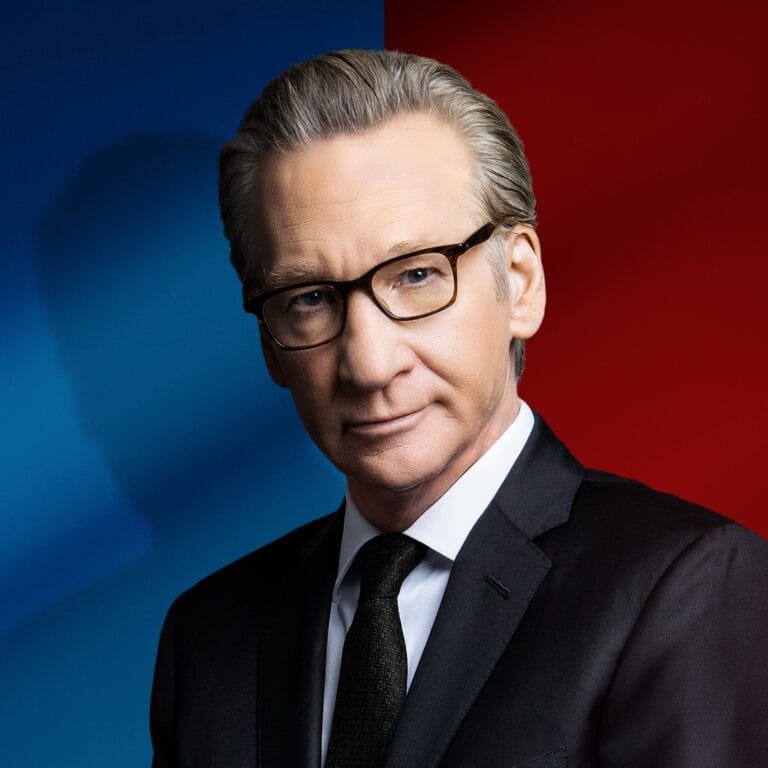
Bill Maher is a comedian, political commentator, and host of Real Time with Bill Maher, known for his satirical take on current events.
Enjoyed this content? Help power future podcast clips (and my caffeine levels)☕
☕ Buy Me a CoffeeEvery coffee helps keep the content coming!
Disclaimer: This content is provided for informational and entertainment purposes only. Views expressed in the embedded video or original podcast belong to the respective creators and do not necessarily reflect the views of this website. No affiliation or endorsement is implied.